PARAFOIL | 2025
Leadership analytics for when you want to grow on the job
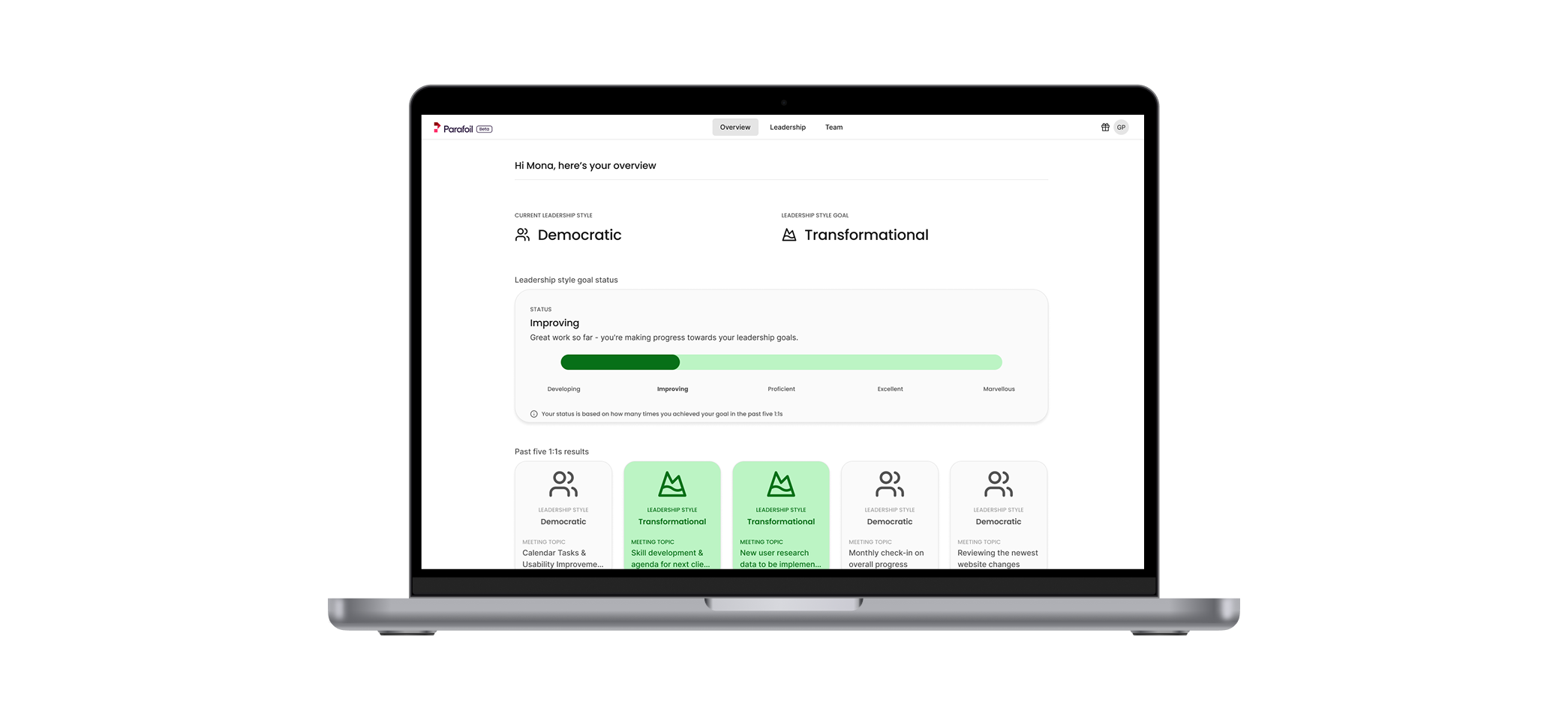
OVERVIEW
Parafoil is an AI-powered leadership analytics product designed to help frontline managers build healthier, more trusting relationships with their teams. As the Founding Designer, I led all UX research and design from early discovery through MVP and Alpha launch. My work led to 3m+ seed round funding from investors.
ROLEFounding Designer (UX/UI & Product)
TIMELINE1.5 years, 2025 - 2026
SKILLSProduct Design
User Research
Start-up Leadership
TEAMMax Helali - Founding Engineer
Nipun Arora - Founding Data Scientist
Ben Perreau - Founding CEO
Challenge
How might we help frontline managers build healthier, more trusting relationships with their teams through data-driven leadership insights, creating more psychologically safe workplaces?
Context
Frontline managers face the daunting task of learning leadership on the job often with little to no training, pressures of deadlines, and limited access to feedback or mentorship. Parafoil enables frontline managers to collect feedback on how their leadership skills are impacting their team, giving them the instant data they need to tune in to a style that works best for them and for their team.
As the Founding Designer, I led all UX/UI research and design from concept to execution for the product MVP and Alpha launch. I worked closely with our Founding Engineer to create a user experience and user interface that simplified complex psycholinguistic data while being fast to implement. In developing Parafoil, I used HCD to guide a product market fit (PMF) approach.
Problem
Management is fundamentally broken…
To deeply understand the pains experienced by managers and to build our ICP, I conducted semi-structured, Jobs to be down interviews and desk research. Initial research discovered that frontline managers in particular were experiencing the pain of leading in virtual environments.
Managers were feeling overwhelmed and underprepared for the transition into people management.
⅓ of folks in the workplace were quitting or quiet quitting because of bad managers
The state of mentorship, coaches and e-learning had become time consuming and too abstracted from the context of the managers relationships
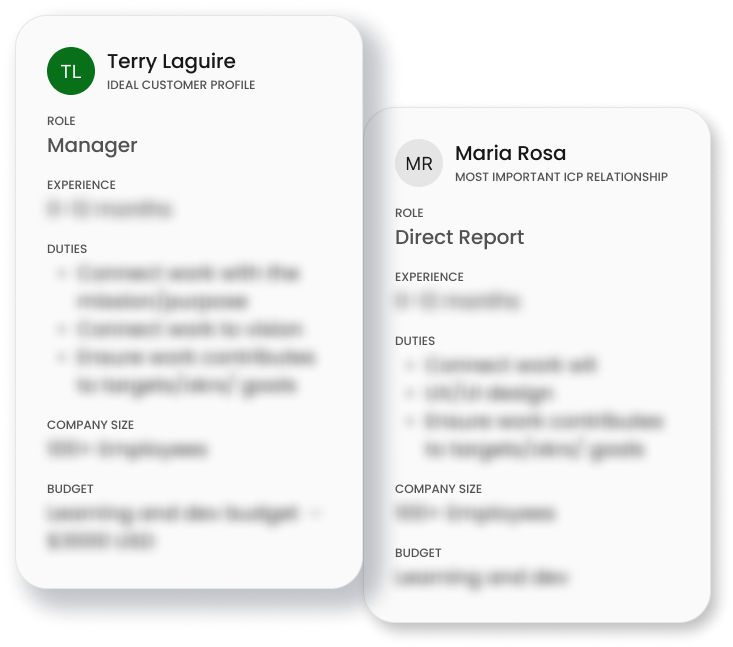
Who was our user?
While I can’t share specifics due to confidentiality agreements, some key constraints that shaped my research further were:
Privacy & security of data
Navigation of power dynamics
Trust building with direct reports
Leadership is painful and it takes decades to get good at it.
Today’s workplace is not slowing down to allow managers the space to grow.
Solution
Parafoil: Lead more, manage less
To solve frontline manager’s leadership pains, we developed Parafoil: a leadership analytics product that supports your leadership growth from your conversations. You download it and it runs in the background of your meetings, analyzing what words you use and how they make you come across to your co-workers. In this way, frontline managers can get immediate feedback on how they are showing up, and in what ways they can improve their leadership style.
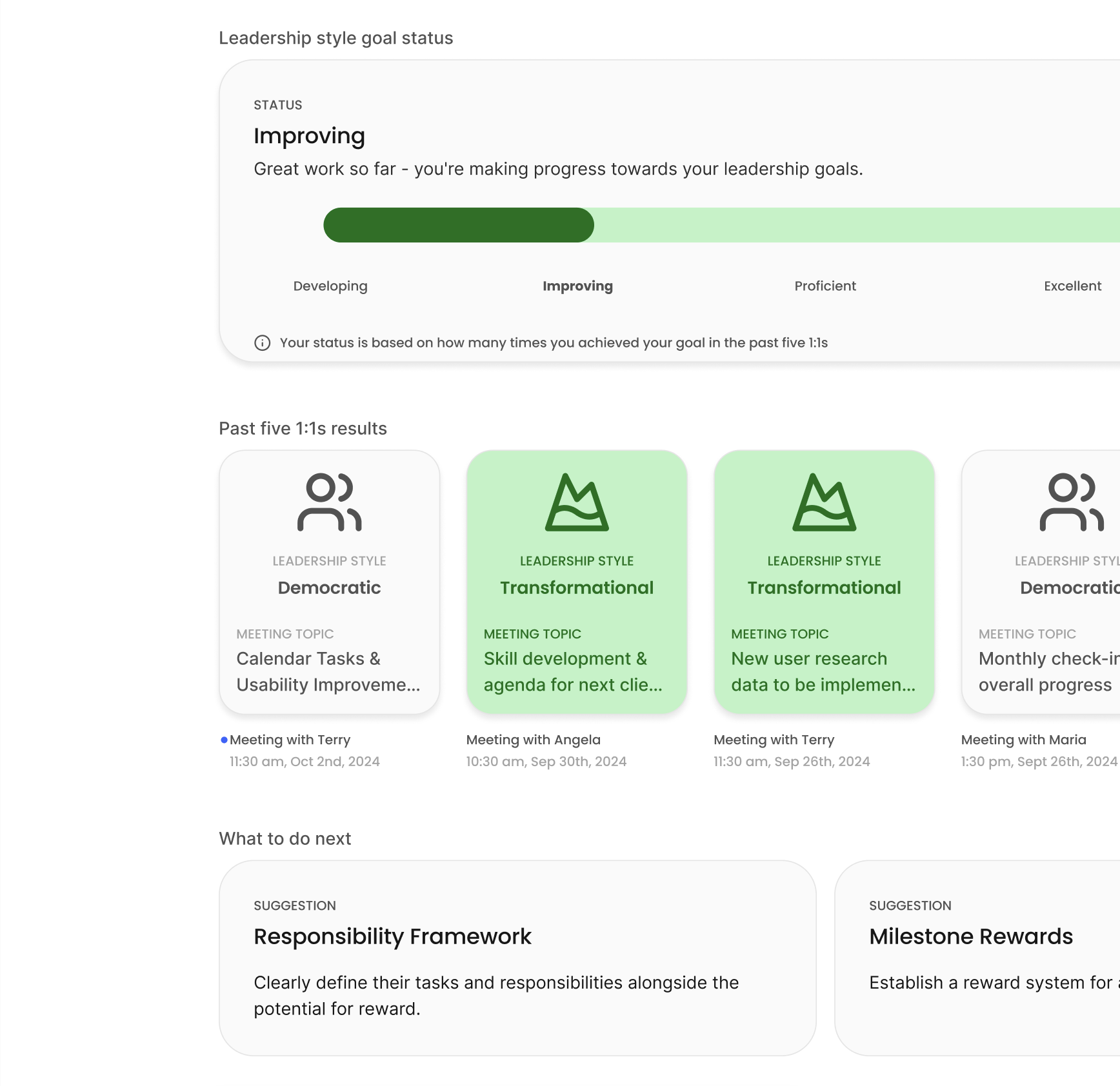
Get personalized insights
Work towards your ideal Leadership Style and associated traits, with analysis after every 1:1.
Analyze how you lead
Get analysis based on your interactions with your team. Runs in the background, no weird bots.
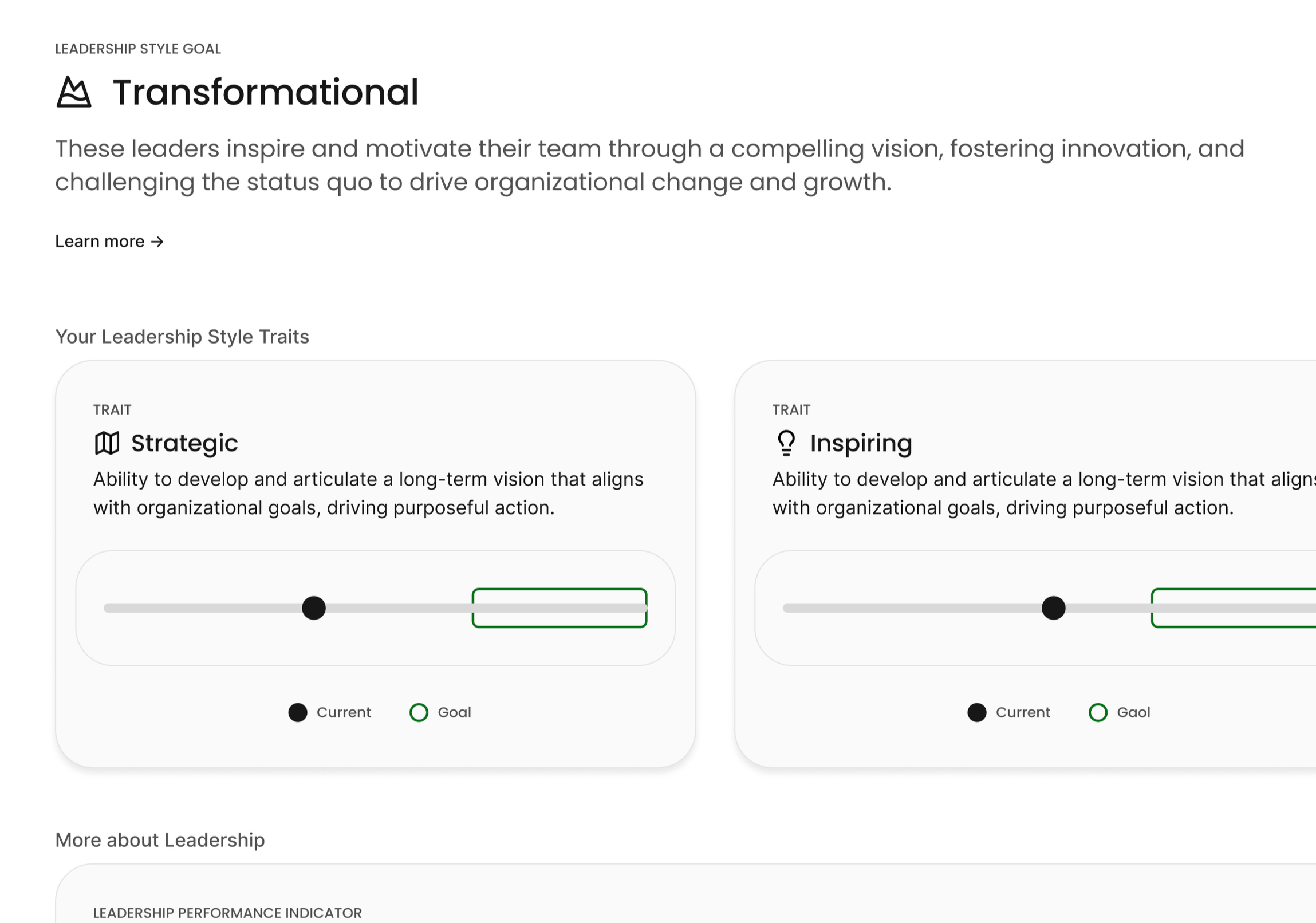
Leadership analysis in action
As we developed our Alpha version, the presidential debate was taking place. We decided it would be a great way to test our leadership ontology and contribute to the larger discussion about leadership and democracy. Below is our report out…


Research & Discovery
Uncovering key barriers to adoption
To get a deeper understanding of the problem, I used a mixed-methods approach to reveal key relationship dynamics, prioritize pain points, and refine our product value proposition. Early on, I discovered prevailing themes of privacy, trust, and navigating power dynamics which created concerns for our tools adoption these concerns were:
Having AI present in your daily 1:1s with your direct reports was disruptive to building genuine, trusting relationships
The outputs of psychological analysis of language were difficult to grasp and so the “so what” was unclear
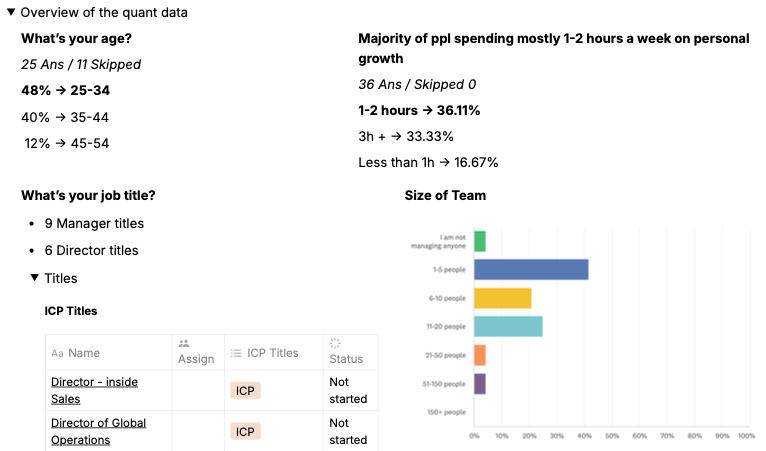
Survey data - Snapshot of early results shared back to team
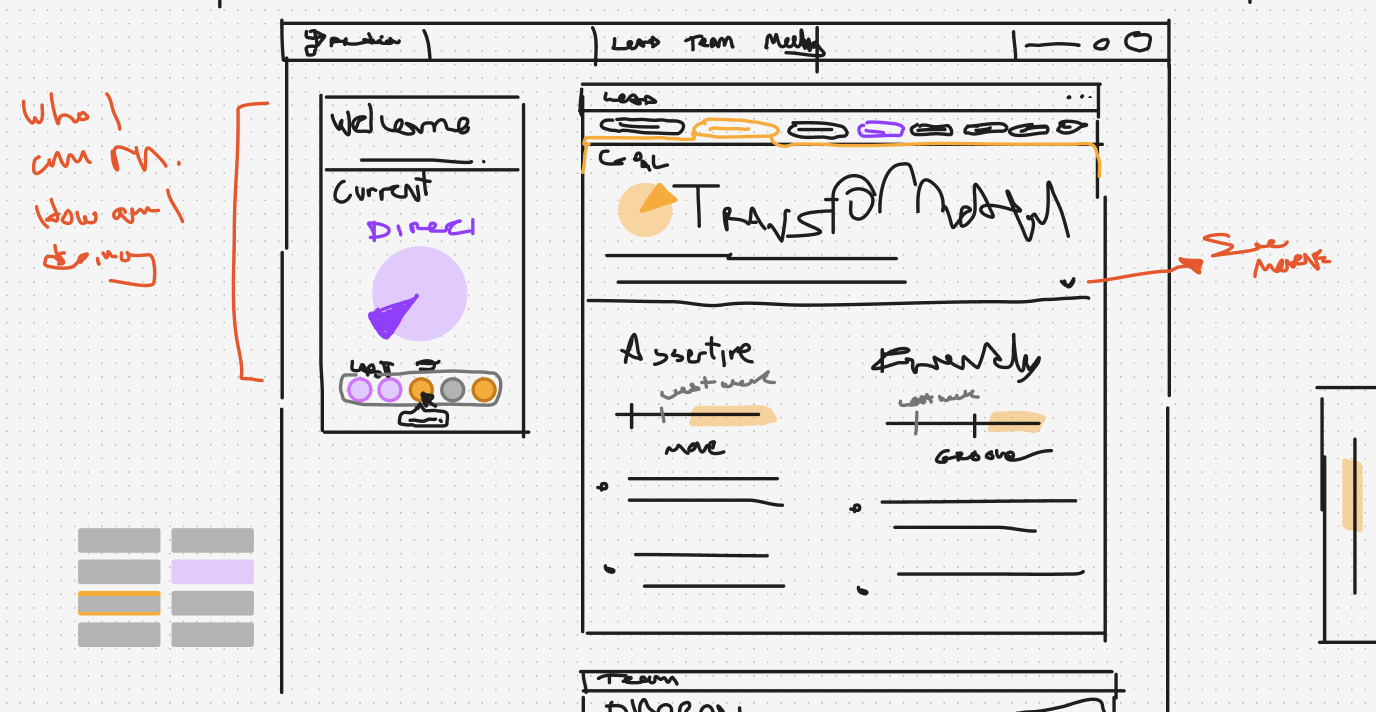
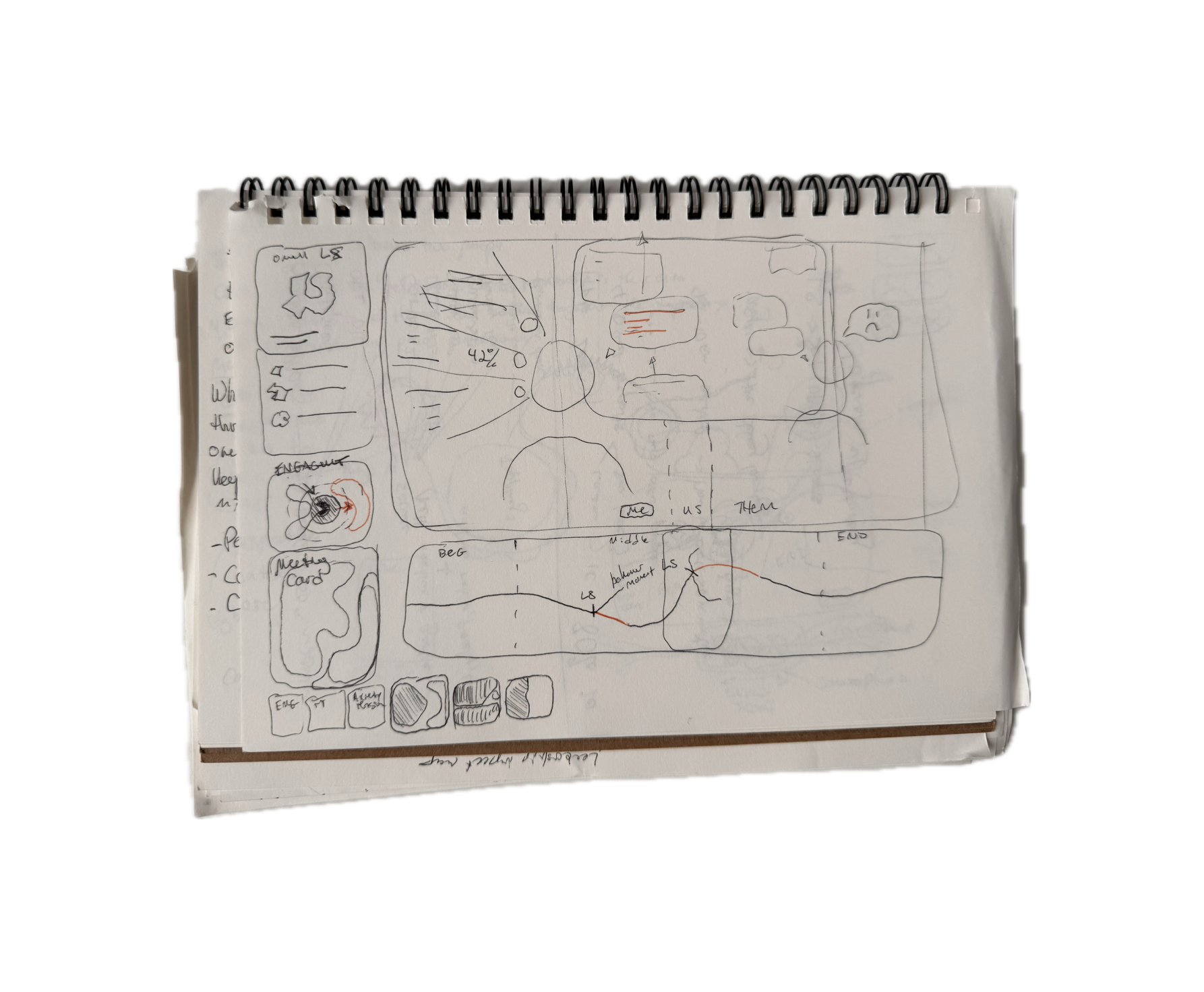
Early product ideation

Iteration 5 - Refinement of overall information architecture and layout into 3 main sections, Home, Team, and Meetings.
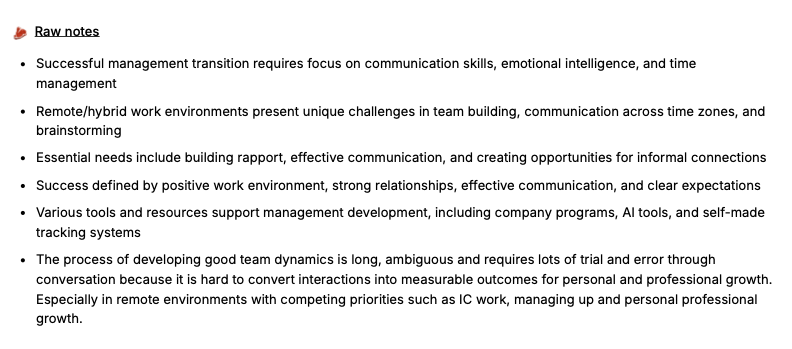
Raw notes - Some post research study notes to myself
Concerns as creative constraints
I reframed the concerns into creative constraints, this way they become a tool to help me shape how to conduct my further research studies. With them in mind, I began to rapidly prototype different product directions based on our value proposition. Using our ICP pain points, I developed features and combined them in various ways to uncover what combination worked well as a product and service. I ran multiple wizard of oz sessions to test these feature sets which generated a prioritized list of features based on user pain and user stories that our team used to narrow our product direction and make an MVP.

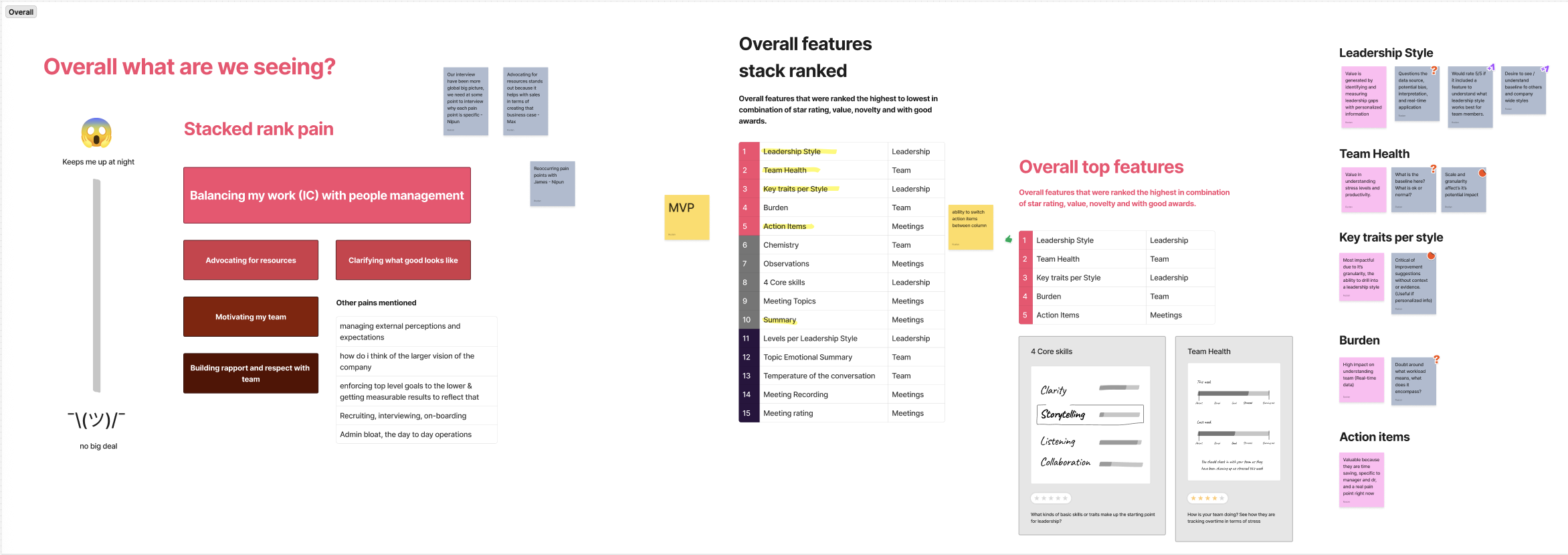
Research - Above is a screenshot of one of my research sessions where I was evaluating feature sets and below is a snapshot of the report-out.
Over the course of several months, I conduct research with over 50 managers which then had direct influence on how I was shaping the product. We were narrowing down our feature list which greatly supported our information architecture. Below you can see some UI wireframes and prototypes as the design evolved from a collection of data visuals to more of a focused product offering.
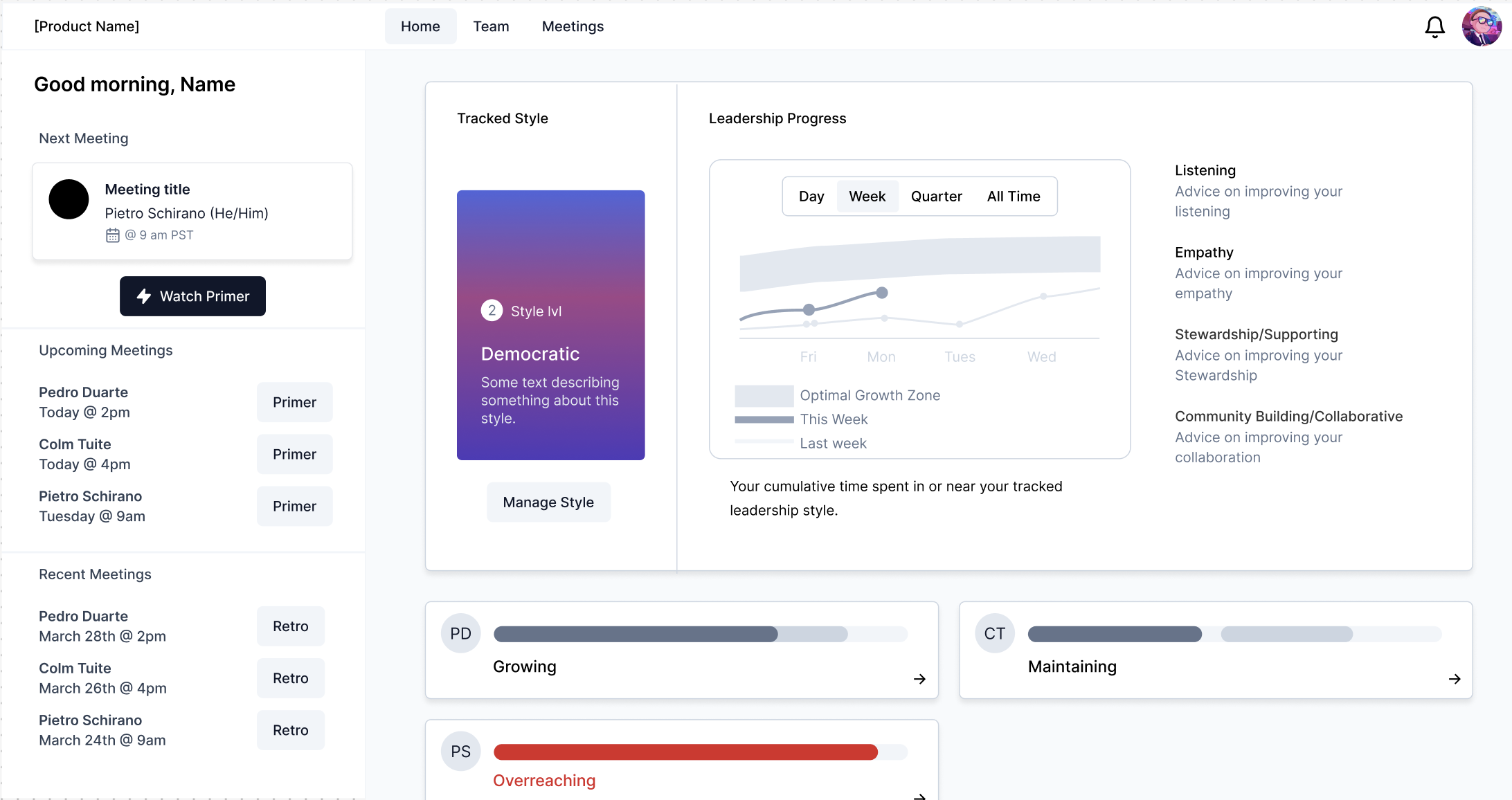
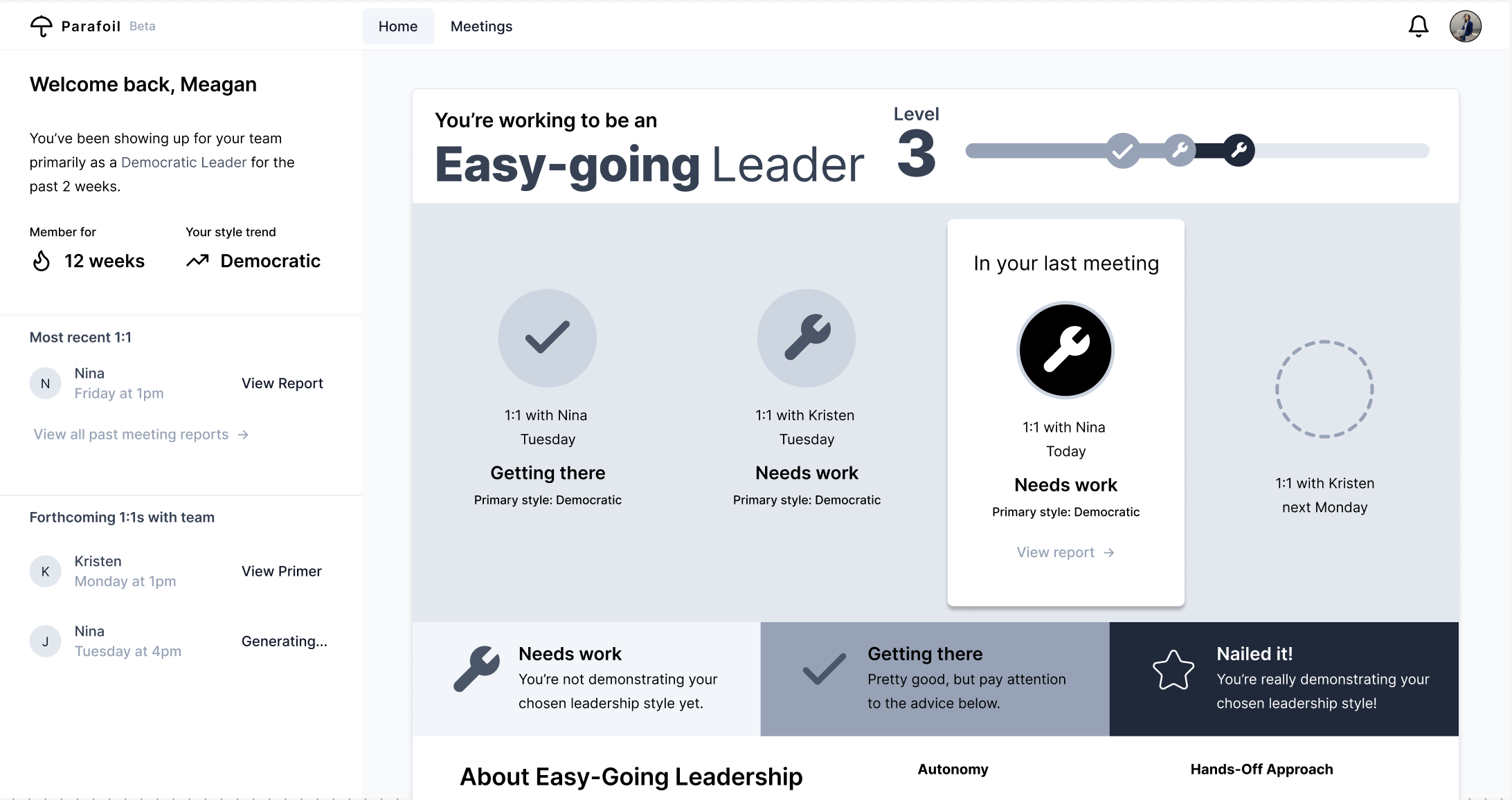
Iteration 6 - Trying out more of a gamified approach with influences from Duolingo as our participants needed more direction rather than graphs
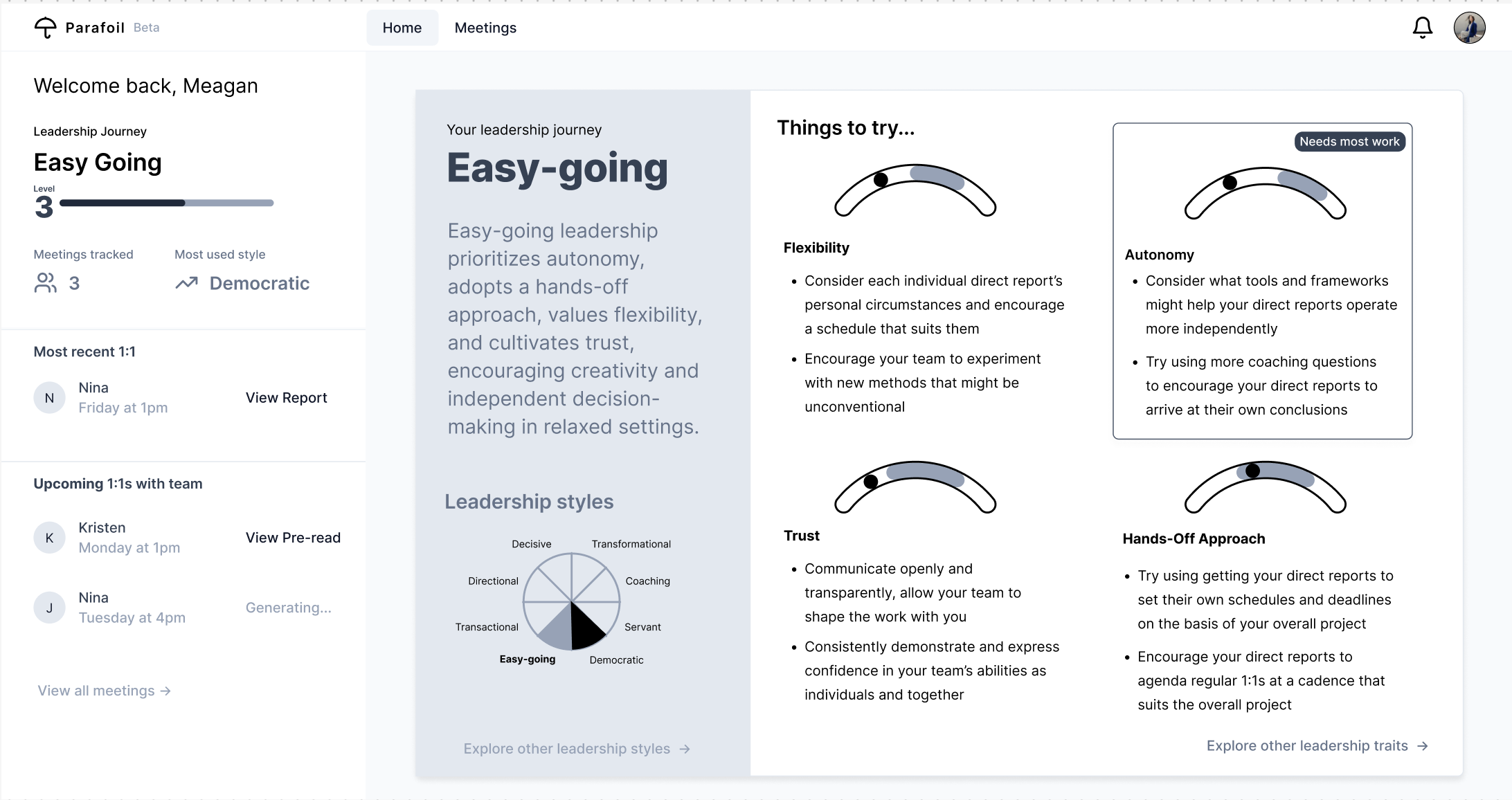
Iteration 7 - Combining use of data visuals as well as some gamified elements into a more accessible version for users based on feedback
We learned that in order to navigate leadership, you needed a couple main components: Context, gap in understanding, and direction of how to grow.
Now we could make an MVP.
From Insight to Execution
Building an MVP
To flesh out our value proposition and build a user experience that kept the conversational context, demonstrated the gaps in understanding, and gave you direction on how to grow, we built an MVP. I created a rapid, high-fidelity mock-up in Figma where I would then meticulously use an AI builder to turn components into code, creating tickets and adding them to the kanban board. Together we built this working version:
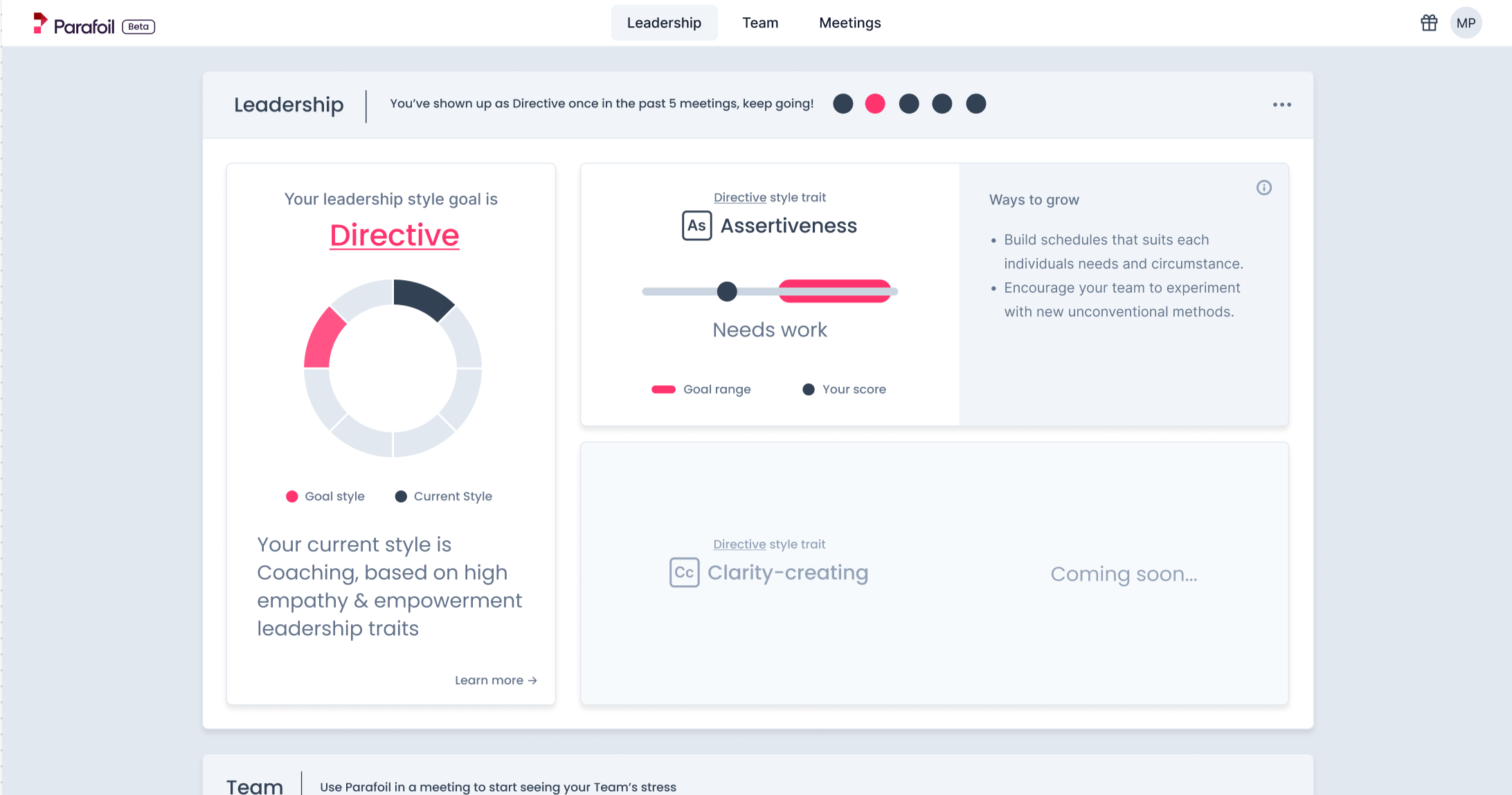
MVP - Our first low-code implementation of the product value proposition
From conducting user research with this MVP we discovered:
The main feature set was compelling
It was difficult to see progress
Navigating the leadership dial was confusing
This directly informed our next steps in building our product. We needed to refine the user experience to be less passive in motivation to keep you progress going and in giving you advice on how to develop in each and every meeting. So I looked to get inspiration from fitness apps such as Strava, where users can easily see how they are doing.
Product experience was now focused on motivation, clear progression, and decisive action for growth.
UX Design & Execution
The Alpha and design system
Iterating from the MVP, I began to build out a design system and all of the components I would need in Figma. Below are some examples from my files.
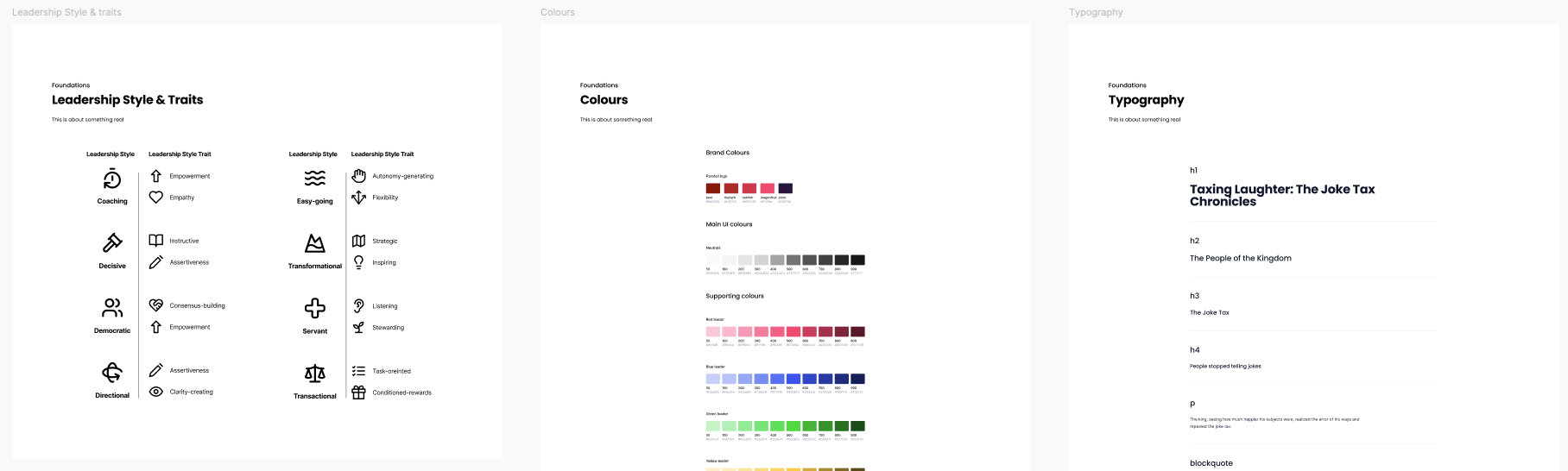
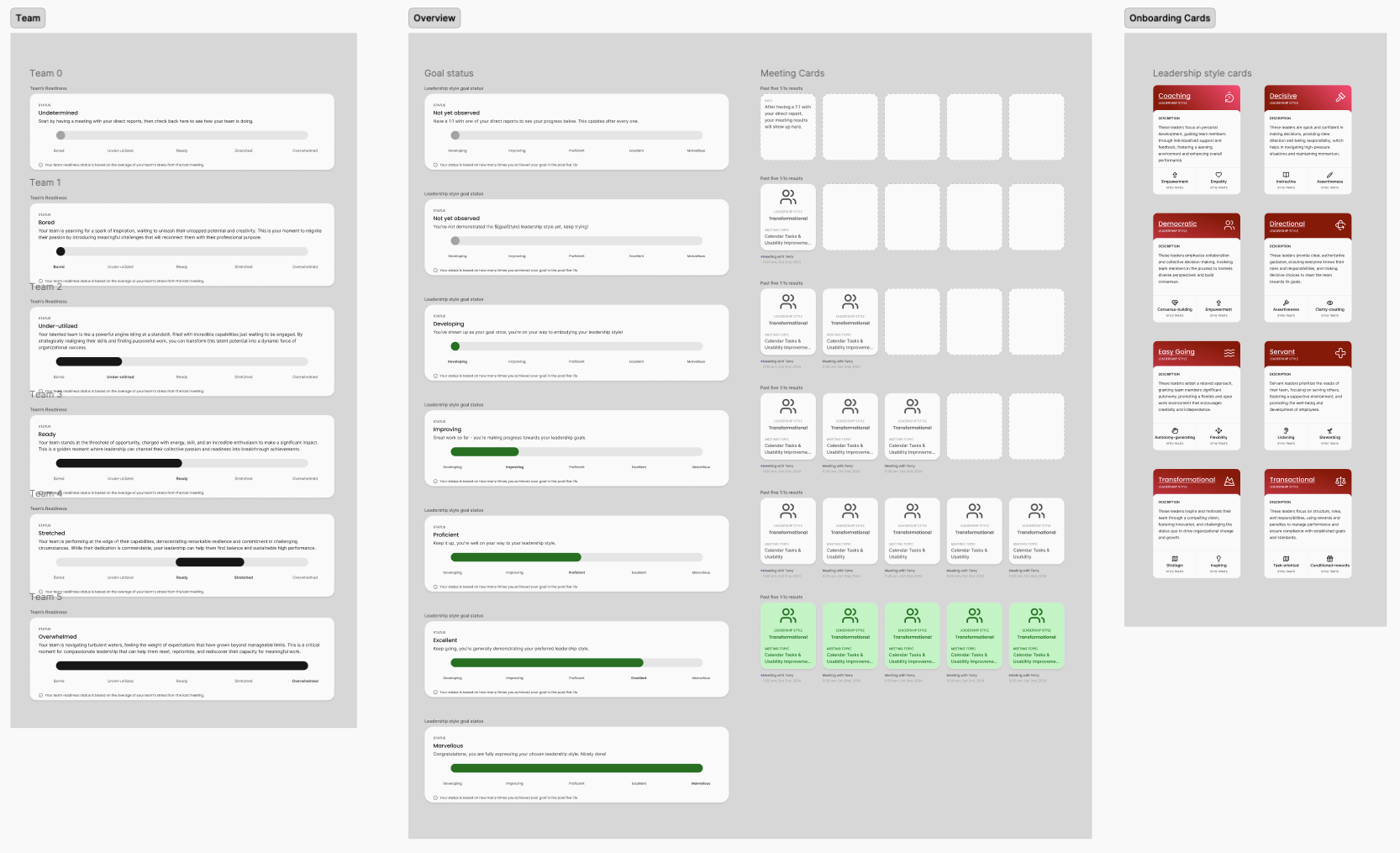
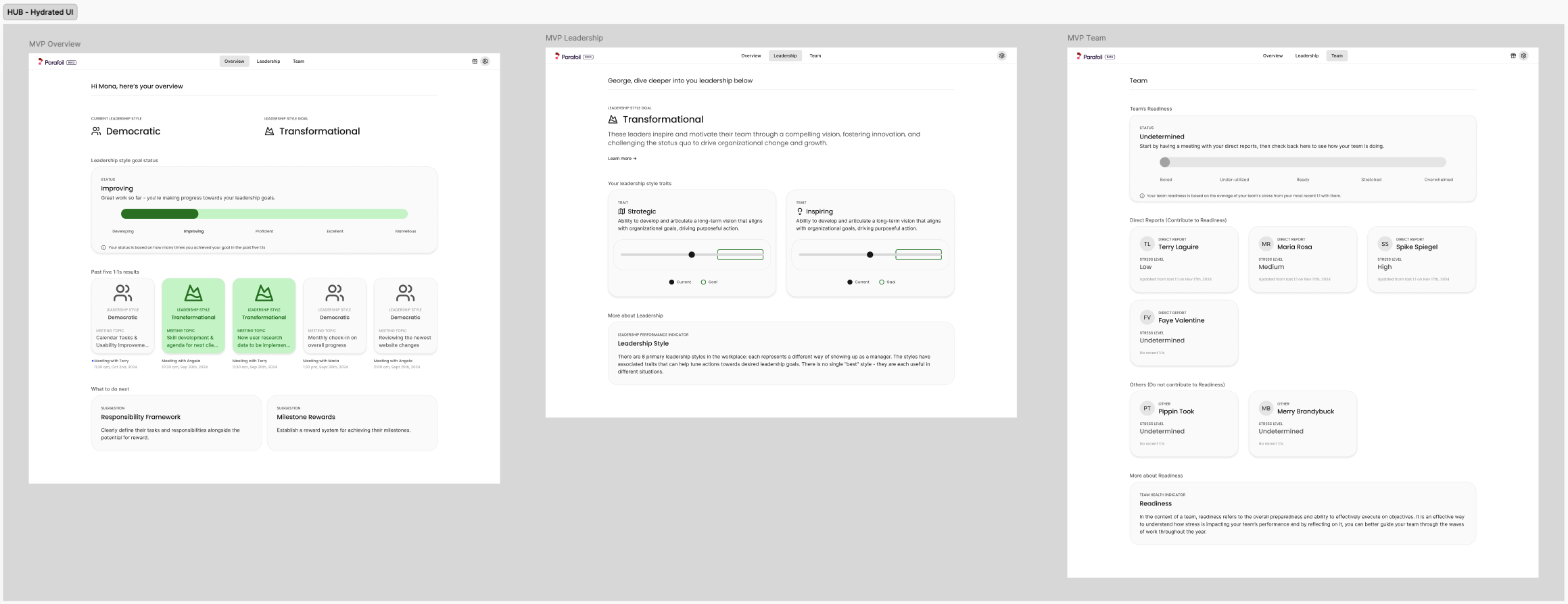
Here my thinking was really informed by creating a space where frontline manager who are experiencing distress, could learn about themselves by themselves. A private, calming experience that uses colour sparingly and with purpose. Although in testing with our engineer, one final hurdle presented itself: we needed a way for users to have complete control over when analysis began during a meeting and if they wanted to pause or stop it for other reasons. This led us to create an innovative solution using the menus extra bar.
This feature allowed us to increase user adoption of the tool as they now had direct control over our apps functionality.
Reflection
This project taught me a lot about myself as a designer but also as a leader. Studying and researching leadership while actively leading research and design at a start-up was an incredible hands-on experience that I never imagined I’d have. I learned how to show up as a leader for a virtual team and the importance of trust in the path towards success. In designing an app for healthier relationships, it showed me the incredible level of care and detail that was needed to ensure the product experience was thoughtfully crafted for a health promoting experience. From the colours, to the layouts, every decision I made was in service to the user and their needs. Language and technology carry a lot of power in its ability to deeply affect healthy relationship building in workplace communities. The product continues on and is entering beta soon if you wish to check it out!